
How to organize documents, codes, and memos in groups and folders
Key takeaways
- Groups help organize documents, codes, memos, and networks in ATLAS.ti Desktop (Windows & Mac).
- ATLAS.ti Web supports groups for documents, codes, and memos.
- One item can belong to multiple groups at the same time.
- Folders create hierarchical structures, while groups work more like labels or tags.
- You can create groups and folders from selections, by drag and drop, or from managers.
Who this article is for
This article is for ATLAS.ti Windows, Mac, and Web users who want to organize projects using groups and folders.
Understand the difference between groups and folders
Groups and folders both help organize your project, but they work differently.
Groups are flexible labels that help you organize and filter entities across your project. For example:
- documents grouped by participant type
- codes grouped by themes
- memos grouped by research stage
An item can belong to multiple groups at the same time.
Folders create a hierarchical structure.
- Folders are useful when you want to organize items into nested structures, especially for codes.
- For code hierarchies, folders and sub-codes are usually more appropriate than groups.
Open managers in ATLAS.ti Windows and Mac
Managers are where you organize documents, codes, memos, and networks.
You can open managers by:
- double-clicking Documents, Codes, Memos, or Networks in the Project Explorer on the left side
In ATLAS.ti Windows, you can also:
- go to Home and select Documents, Codes, Memos, or Networks
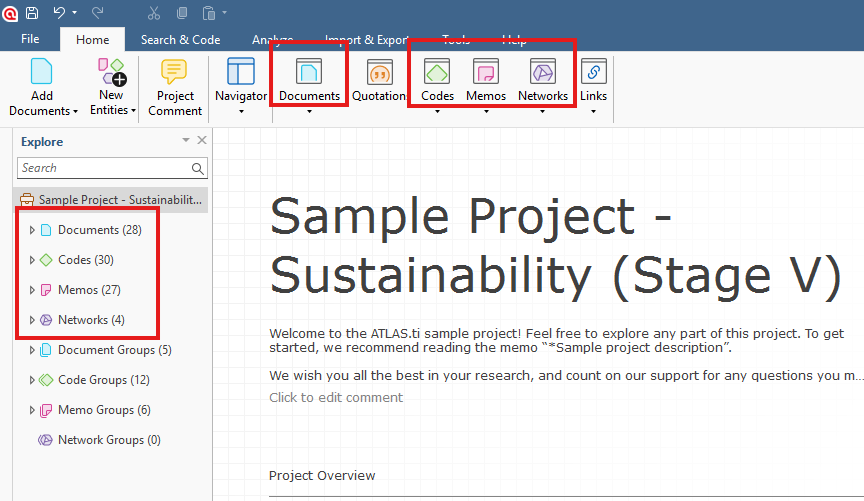
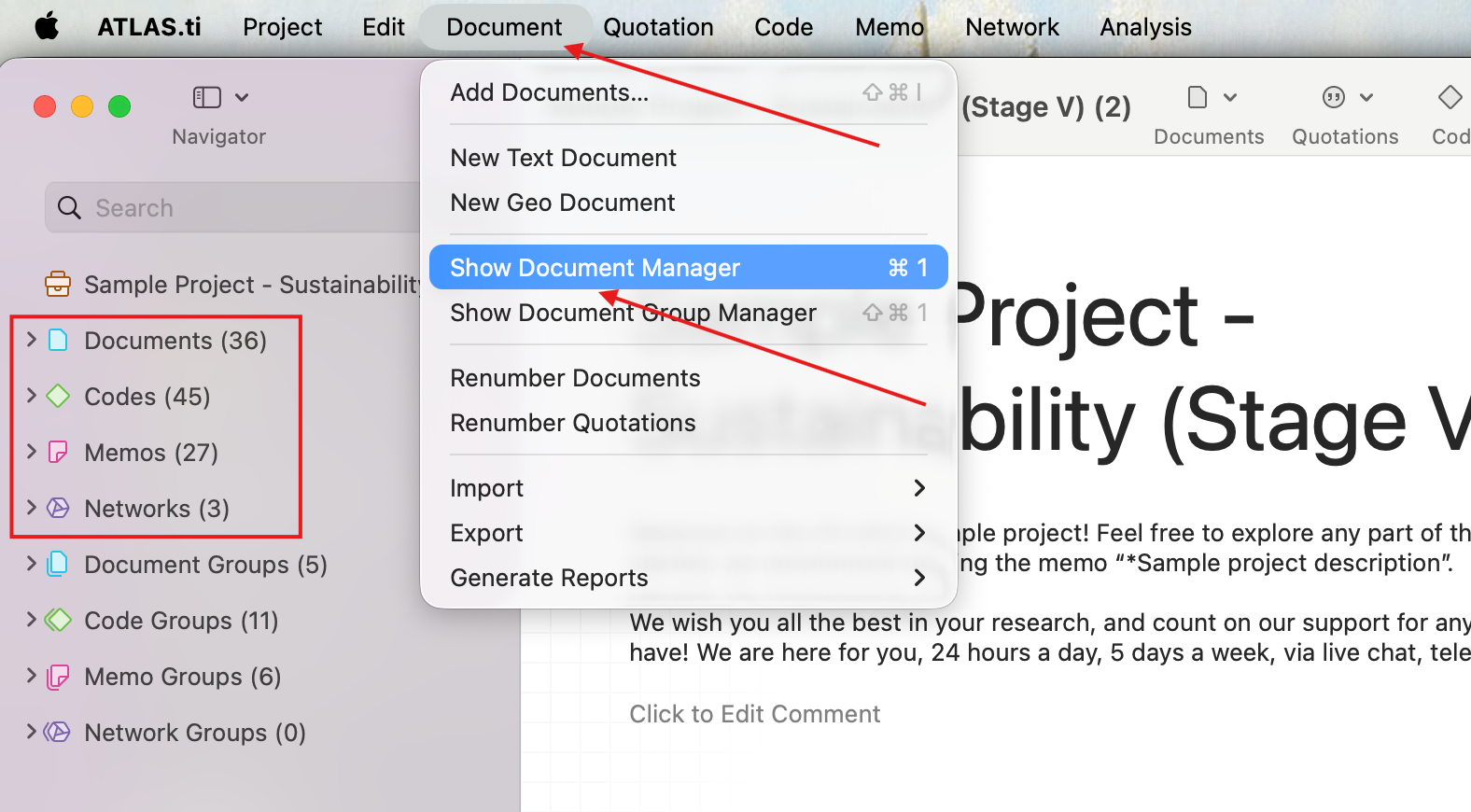
In ATLAS.ti Mac, you can also:
- go to Document > Show Document Manager
- go to Code > Show Code Manager
- go to Memo > Show Memo Manager
- go to Network > Show Network Manager
Inside each manager:
- the right side displays the entities themselves
- the left side displays groups
- folders appear within the entity list on the right side
Create groups and folders in Windows and Mac
To create groups or folders:
- Open a manager
- Select one or more items
- Right-click the selection
- Choose:
- New Group from Selection
- New Folder from Selection
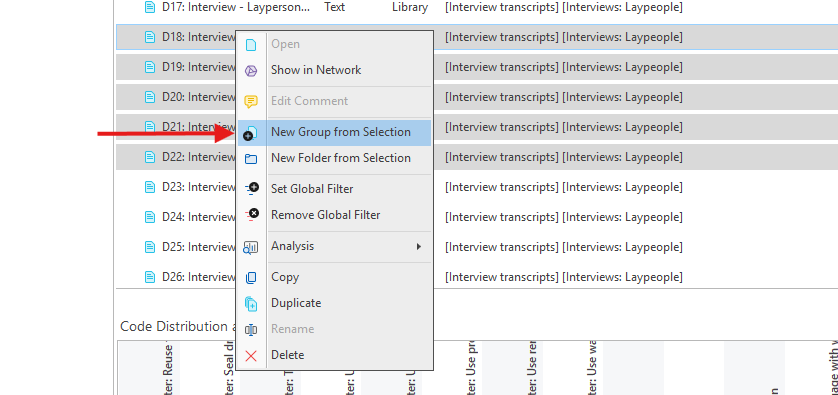
This works for documents, codes, memos and networks
You can also create empty folders or other entities directly from managers:
- Open the manager
-
Click New
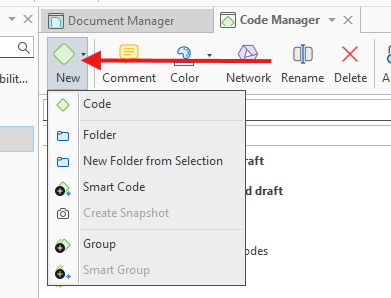
- Select Folder or any desired option.
In the Code Manager, for example, you can create:
Organize entities with drag and drop
You can quickly organize items using drag and drop.
For example:
- drag codes into an existing code group
- drag documents into document groups
- drag memos into memo groups
You can also drag items into an empty area in the groups panel to create a new group automatically from the selected items.
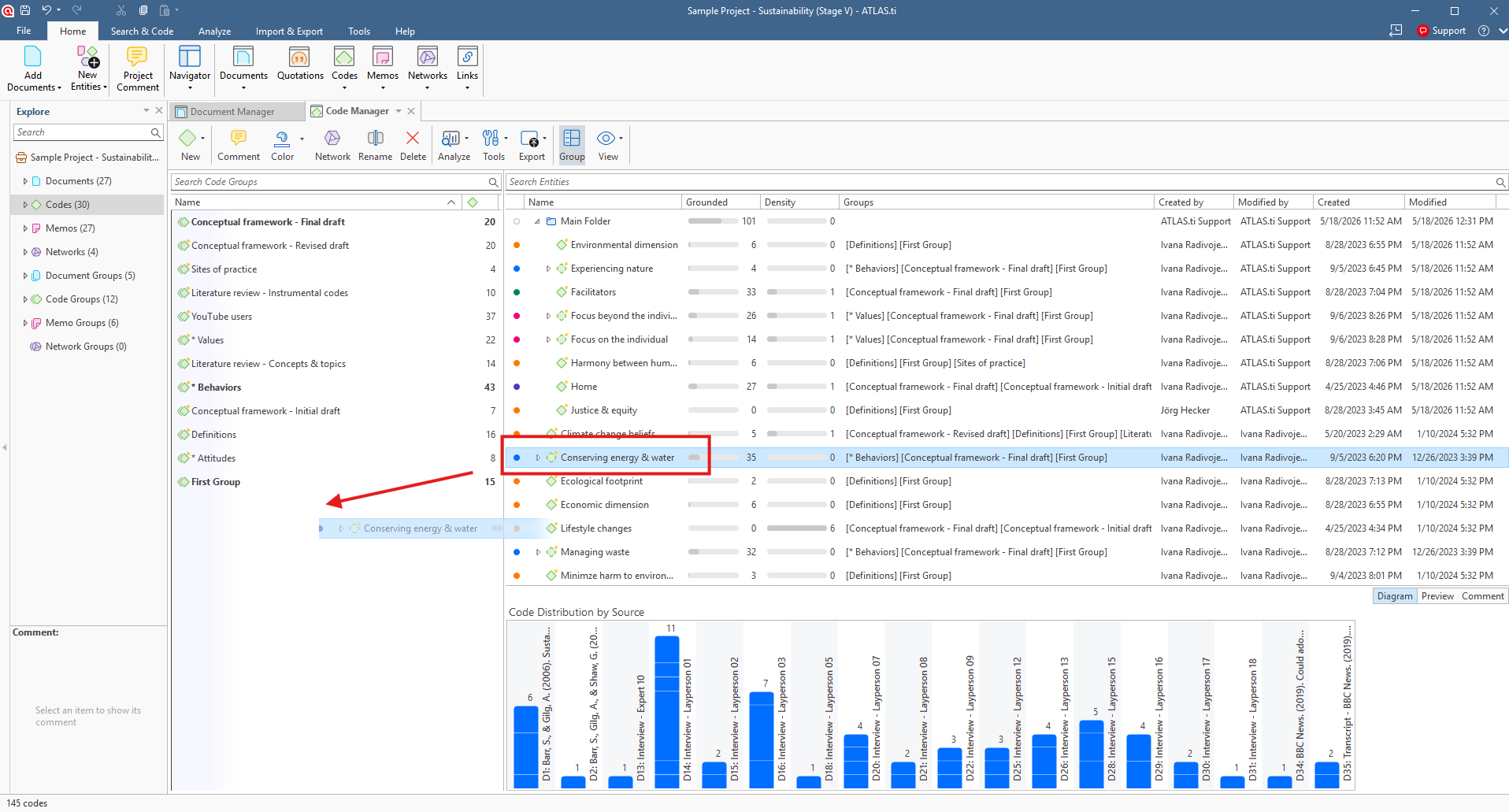
This is often the fastest way to organize larger projects.
Use group managers
ATLAS.ti also includes dedicated group managers:
- Document Group Manager
- Code Group Manager
- Memo Group Manager
- Network Group Manager
To open them:
- double-click the group section in the Project Explorer
These managers help you navigate and organize groups themselves, which is especially useful in large projects.
Organize groups in ATLAS.ti Web
In ATLAS.ti Web, you can organize documents, codes and memos.
Quotations do not support groups.
To manage groups:
- Open the Document, Code, or Memo Manager from the left panel
- Locate the Groups column
- Click inside the Groups field for an item
-
Select existing groups or create new ones
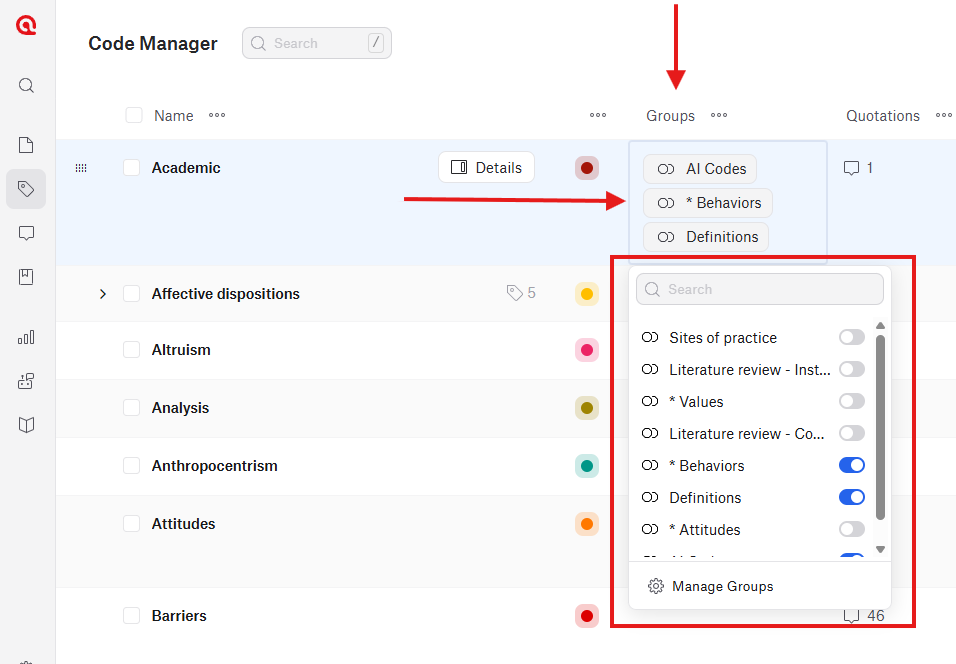
You can assign multiple groups to the same item.
To manage all groups:
- Open a manager
-
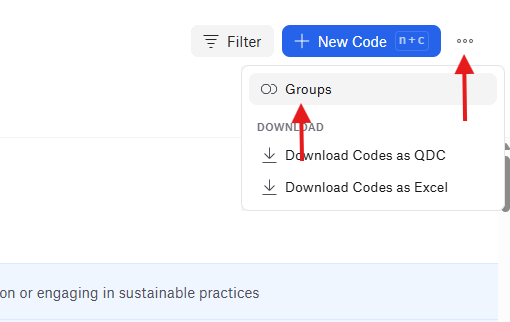
Click the three dots in the top-right corner
-
Select Groups
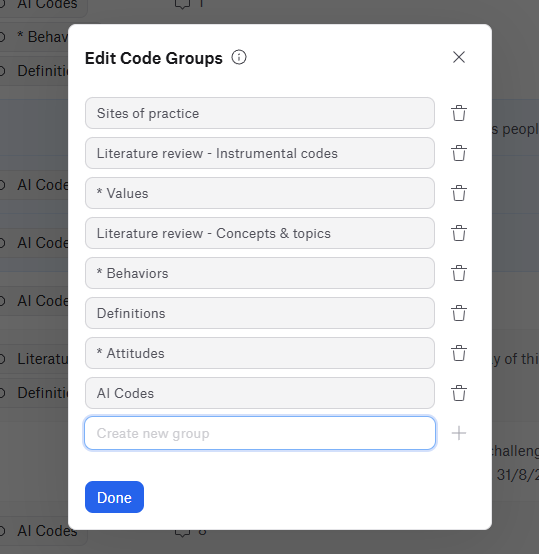
You can:
- create groups
- rename groups
- delete groups
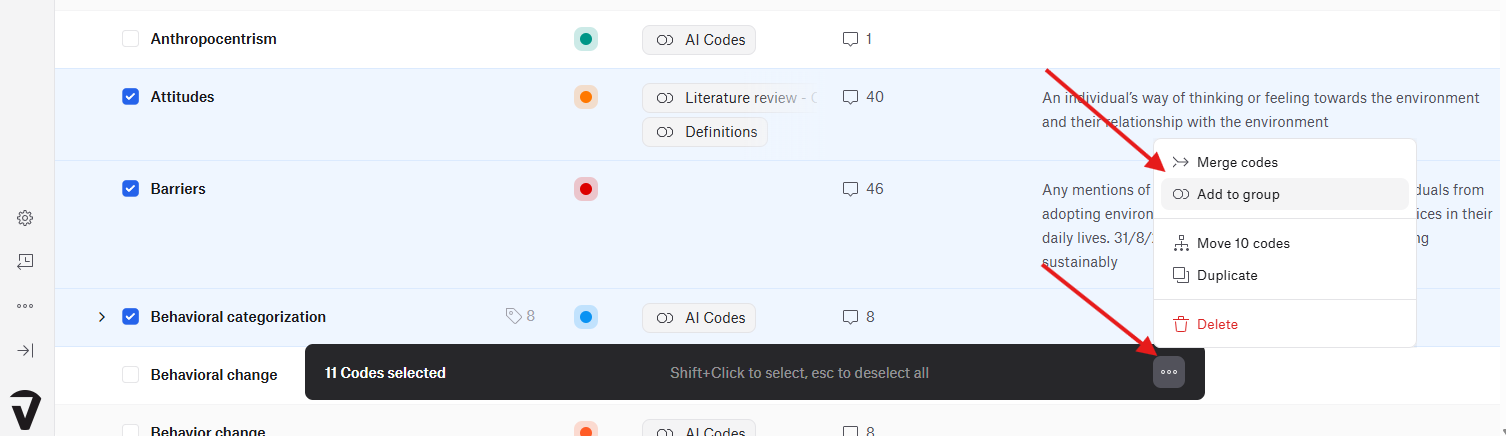
You can also:
- Select multiple items using the checkboxes
- Click the action menu at the bottom
- Select Add to group
Common issues
- I cannot find my groups
- Make sure the groups panel is visible inside the manager. In some layouts, it may be collapsed or hidden.
- Should I use folders or groups?
- Use:
- folders for hierarchical organization
- groups for flexible labels and filtering
- Use:
- Why can one item belong to several groups?
- Groups are designed as organizational labels rather than containers. This allows the same document, code, or memo to appear in multiple analytical contexts.
When to contact support
Contact support if:
- groups are not saving correctly
- drag and drop does not work as expected
- managers or groups panels are missing
- code hierarchies behave unexpectedly after syncing or importing projects